





 Home
Home- Info
- Application Guide
- Rehabilitation
- Musculoskeletal Assessment
Musculoskeletal Assessment
"Improvements in grip strength closely paralleled improvement in more complex motor tasks, suggesting that although a simple function in itself, strength of grip can be used as an index of recovery of arm function.“
- Sunderland et al, 1973
Musculoskeletal Assessment
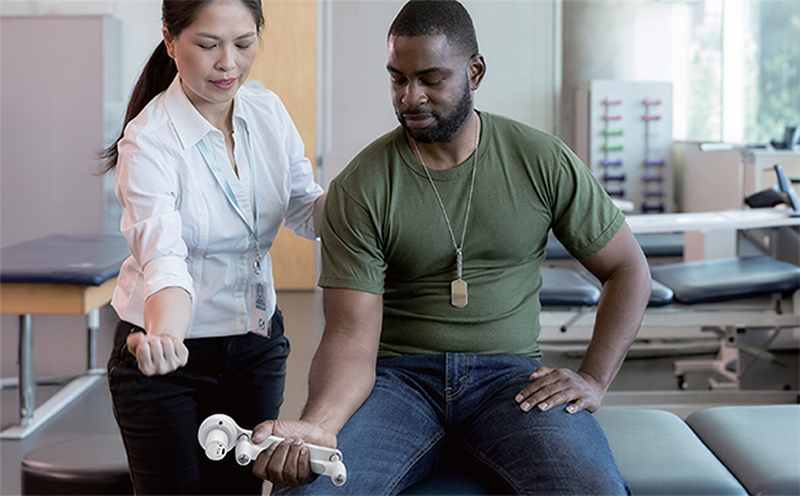
Measurement of hand and forearm strength is used for diagnosing and tracking recovery from stroke, traumatic injuries, and chronic conditions. Usage of professional-grade dynamometers is essential for understanding overall frailty and functional capacity.
Grip strength as a predictor for whole body strength
Strength of hand and forearm muscles is strongly correlated with whole-body mass and strength as well, and as such grip strength is often used as a surrogate measure for whole-body strength.
Conclusion
Low grip strength was found in 67.83% women and 52.13% men in institutional care. HGS, regardless of gender, is associated with mobility, strength of the lower limbs, and dynamic balance. HGS assessment can be a simple, fast, and inexpensive way to assess the prevalence of mobility limitations and functional performance. Early diagnosis will facilitate the planning and application of appropriate interventions in order to prevent disability and mortality in long-term care facilities.
Source
Wiśniowska-Szurlej, A., Ćwirlej-Sozańska, A., Wołoszyn, N., Sozański, B., & Wilmowska-Pietruszyńska, A. (2019). Association between Handgrip Strength, Mobility, Leg Strength, Flexibility, and Postural Balance in Older Adults under Long-Term Care Facilities. BioMed research international, 2019, 1042834
Strength Training
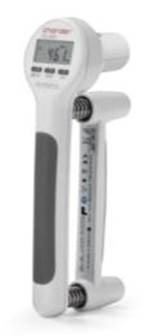
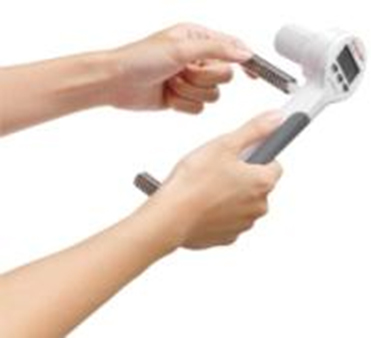
The Strength Training variant can be configured with different compressible springs to offer varying resistance levels and capacities, which allow the user to not only measure their grip strength in a more natural motion, but to improve and train it as well.
In addition, the count function means that each rep meeting the grip strength target will be automatically counted, saving time and effort for observing therapists.
Diagnostic Assessment
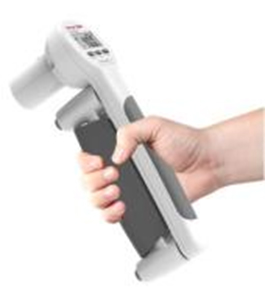
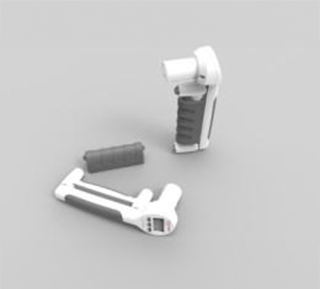
The Diagnostic Variant of the MG4800 has a non-compressible grip. This grip style will be most familiar to those who are accustomed to most other dynamometers available on the market, which are used for measurement only.
In addition, it features a removable grip to provide two different grip spans; when removed, the smaller grip span makes it easier for children to hold and use.