





 Home
Home- Info
- Application Guide
- Fitness
- Objective Assessment
Objective Assessment
With quantifiable body composition data, trainers can accurately determine their client's current muscle-fat balance and other vital metrics, and set realistic goals.
Going Beyond the Scale
Charder's Body Composition Analyzers can provide validated assessment of muscle, fat, water, and cellular health, providing a much clearer picture of progress than weight alone.
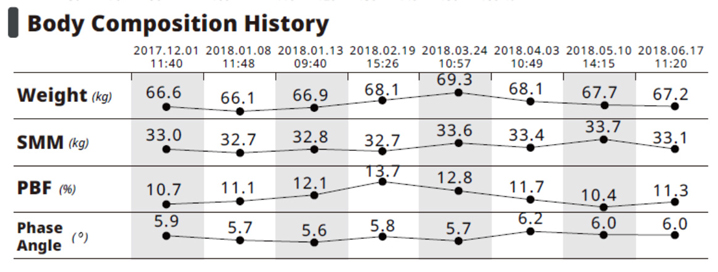
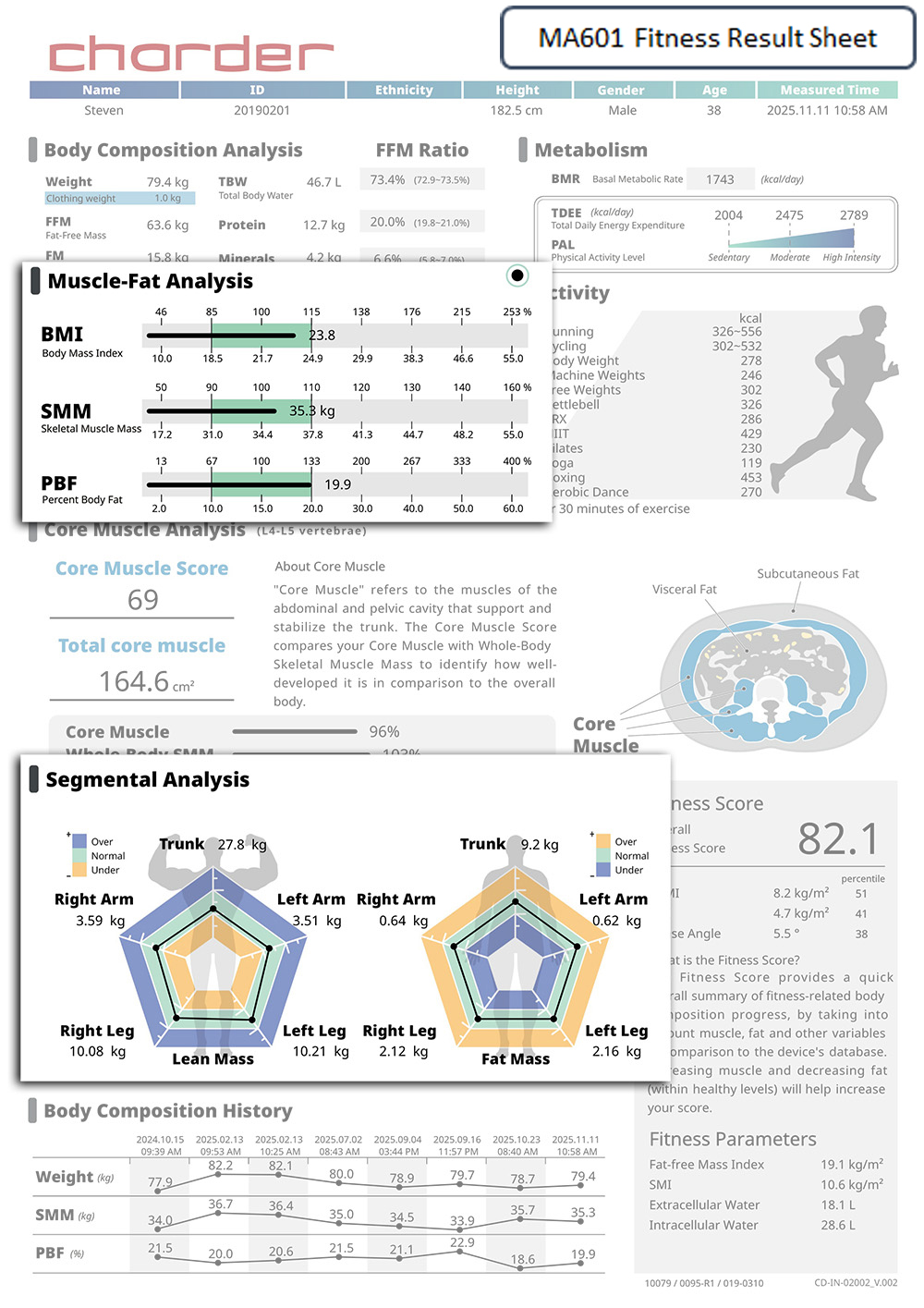
Body Composition History
Safety of use (no radiation) and fast measurement time (less than a minute) allows for evaluation of progress and immediate adjustment based on hard data, ensuring maximum efficiency and superior results
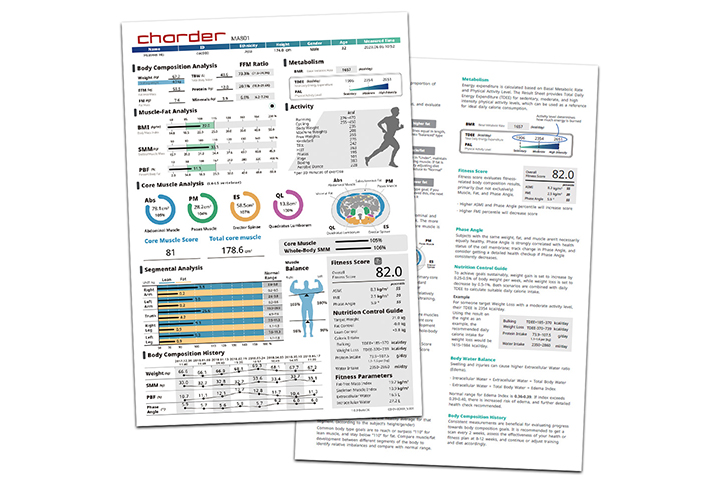
Overview
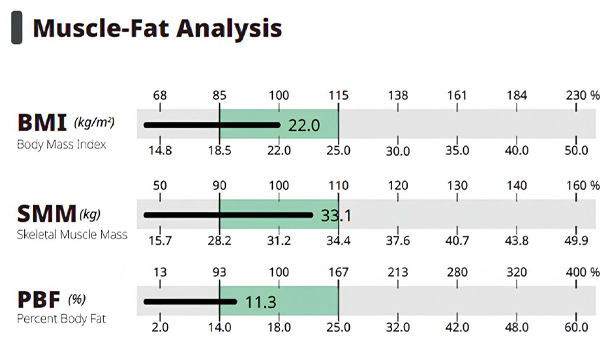
Muscle-Fat Analysis
Observe muscle-fat balance to determine training goal
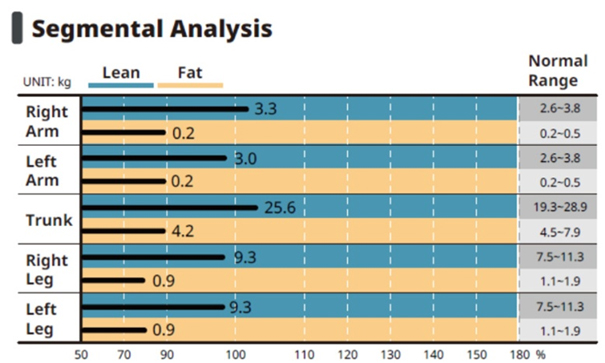
Segmental Analysis
Check for imbalances
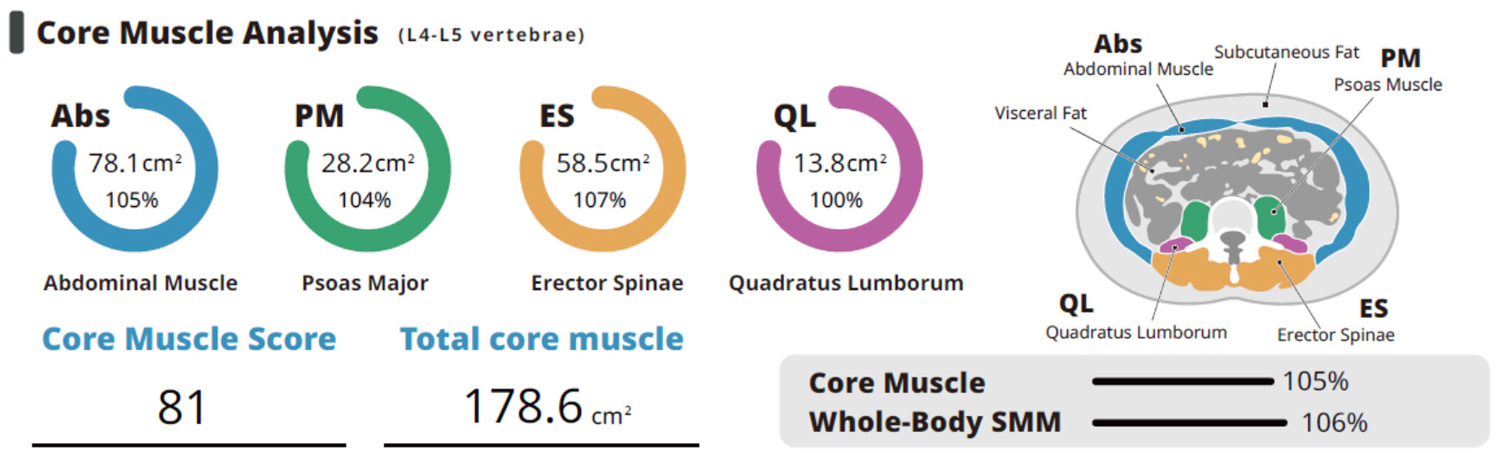
Assess Core Muscle balance
Typical Clients | Data-Driven Client Transformation
Optimize Goal-Setting
- Monitor Balance: Track muscle-fat balance to set baseline and target
- Segmental Analysis: Identify specific areas for training to maximize progress
- Strategic Planning: Set specific and realistic goals and construct personalized training plans
Motivation and Consistency
- Visualize Progress: Provide proof of positive body changes to keep clients motivated
- Validate Success: Maximize client morale by highlighting positive changes in muscle-fat proportion, even if weight is unchanged, helping adherence and keeping to healthy habits
Athlete Clients | Optimizing Performance & Injury Prevention
Segmental Muscle Analysis – Spotting Risk
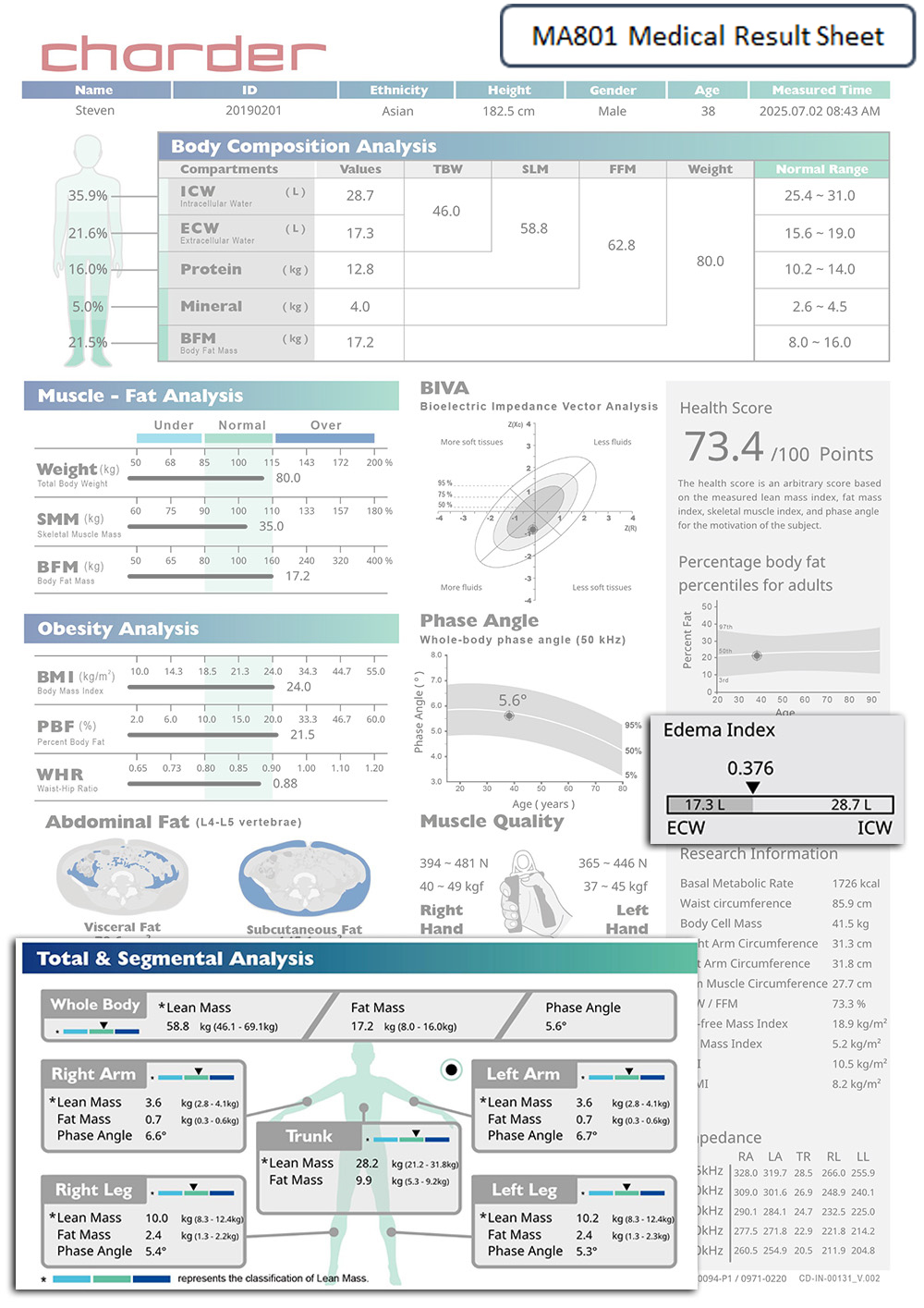
- Identify Imbalances: Compare muscle mass between limbs and identify imbalances (e.g., in a leg-dominant sport like football, check lean mass change between the right and left leg)
- Actionable Insight: An observed imbalance (e.g., 3% leg difference) signals a potential issue from sports play or training form. Trainers can intervene and adjust training to prioritize unilateral exercises to correct imbalance and prevent injury
Body Water Analysis – Monitoring Recovery
High ECW / TBW (Edema Index) ratio can be an important indicator of various physical conditions
- Stress & Overtraining Indicator: Intense training puts the body under physical stress, requiring adequate rest and recovery
- Inflammation Alert: ratio can reflect cellular inflammation.
- Risk Reduction: Monitoring the Edema Index helps trainers to prescribe less intense workouts when suitable and reduce the risk of overtraining injuries.
Elderly Clients | Preventing Frailty & Sarcopenia
Reducing Obesity-related Health Risks
Obesity correlates strongly with health issues, and many clients come to the gym to try and reduce risk by reducing fat. Visceral Fat in particularly is closely linked to health issues, and is worth tracking regularly and keeping within healthy range.
Combating Sarcopenic Obesity
Sarcopenic Obesity (excess fat + insufficient muscle) is linked to frailty, diabetes, and higher disease risk. Muscle development is vital for older and obese clients, especially those with muscle/fat imbalances.
Prevent Frailty by Tracking Muscle
Use Segmental Analysis to identify and target specific body areas (particularly in the legs) that are insufficient to support body weight and need to build muscle.
Trainers can establish baselines and use various methods to help clients preserve joint health, reduce risk of falls, and prevent frailty.
Trainers can establish baselines and use various methods to help clients preserve joint health, reduce risk of falls, and prevent frailty.